1941 Air Attack: Plane Shooter
- 4.7
- Rating
- 10.00M
- Installs
- Free
- Price
 Analysis by App-foxy
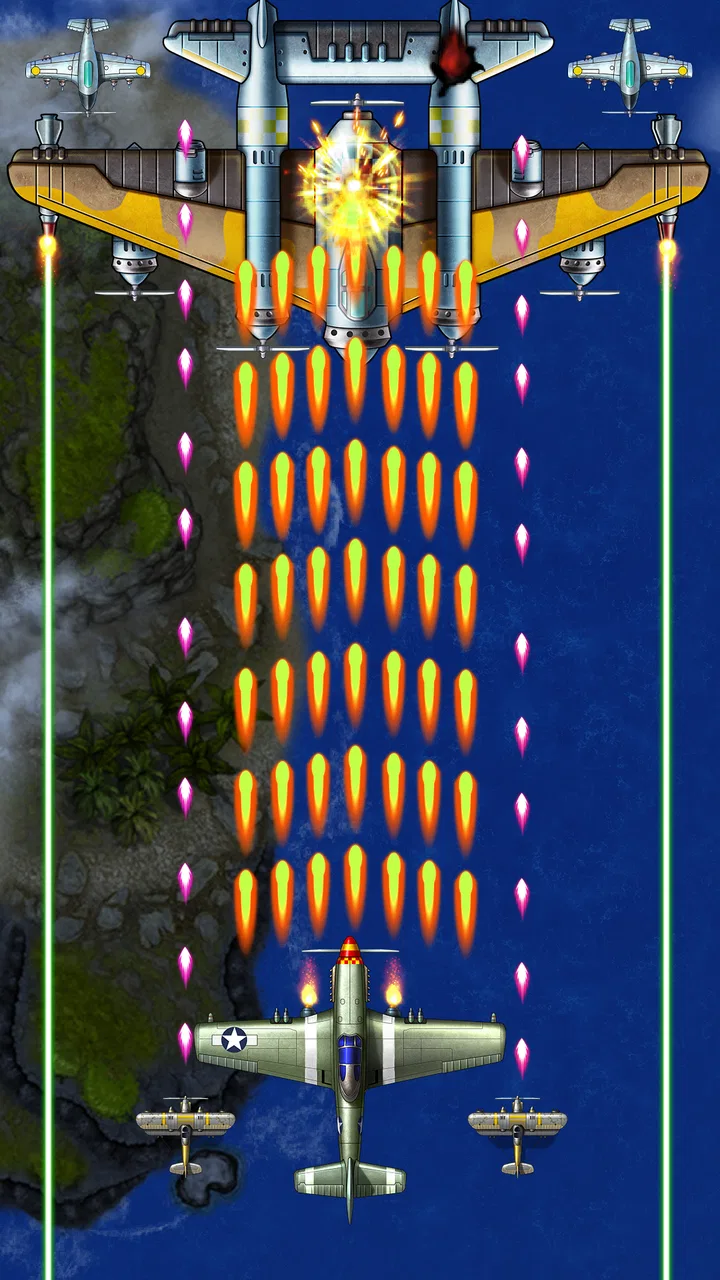
I spent time with 1941 Air Attack: Plane Shooter as a quick-play arcade shooter, paying particular attention to how easily I could read the action, control the aircraft, and return to a session in different everyday situations. It is a free game from Onegame Global Limited, built around aerial combat with a World War II theme. The basic appeal is immediate: move through enemy-filled skies, fire continuously or as the controls allow, and try to survive long enough to make progress.
What makes it worth discussing beyond its familiar arcade premise is how much the experience depends on attention and physical input. A plane shooter can look simple but become demanding when enemies, projectiles, scrolling scenery, and touch controls compete for the same small screen. In my experience, this game is easiest to enjoy when I have a few uninterrupted minutes and can keep both eyes and hands focused on the display. It is less suitable when I need a calm, low-pressure game or when visual overload and repeated finger movement are likely to be tiring.
The game sits in the arcade category and carries an Everyone 10+ age rating. It is free to install, although optional in-app purchases range from $0.99 to $134.99 per item. The version I reviewed was 15.7, and it runs on Android 8.0 or later. Its broad reach is reflected in more than 10 million installs, while its average rating is 4.7 from around 47 thousand ratings. Those figures suggest a strong audience, but they do not replace personal testing: the right question is whether its fast, touch-led design fits your own way of playing.
You May Also Like

 Blood Strike: 2.5 Anniversary
Blood Strike’s Loadouts Turn Every Drop Into a Tactical Gamble
A close look at Blood Strike’s custom loadouts: how fast access to signature weapons reshapes its battle royale rhythm, rewards preparation, and narrows the gap between fights.

 Pandora - Music & Podcasts
Pandora’s Music Is Easy to Start, but Harder to Recover
Pandora’s strength is its low-effort path from a seed to a station. Its weak spot is how much confidence it asks you to place in connection, setup, and quiet recovery.

 8 Ball Pool
 Is Built on Rivalries, Rematches, and Routine
A close look at the rivalries, rematches, shared routines, and unanswered safety questions that turn a quick pool match into a persistent mobile community.

 Samsung Music
’s Quiet Strength Is Playing What You Already Own
Its reach comes less from spectacle than from dependable access to a personal library. That simplicity is both the app’s strongest retention engine and its ceiling.

 AccuWeather: Weather Radar
AccuWeather Review: A Quick, Clear Forecast for Everyday Decisions
For everyday plans, the best forecast is the one you can understand quickly. AccuWeather makes rain timing, radar, and local conditions easy to act on, with a few trade-offs.

 Hill Climb Racing
Why Hill Climb Racing Still Turns Crashes Into One More Run
A tiny car, a bumpy hill and one more upgrade: Hill Climb Racing keeps resurfacing because its simple chaos makes every near-miss feel personal.
More From Our News Desk



Reading the battlefield and finding your way around
The first thing I noticed was that the core game is easier to understand than many more elaborate mobile shooters. The aircraft, enemies, shots, and movement direction are presented in a direct arcade format rather than through a complicated interface. I did not need to learn a large collection of menus before understanding the main task. That simplicity helps when I want to start quickly, and it also makes the game more approachable for someone who is familiar with classic scrolling shooters but does not want a long tutorial.
At the same time, visual simplicity is not the same as perfect readability. During busy moments, several moving elements can occupy the screen at once. An enemy plane may be easy to identify in isolation, yet harder to track when the background, projectiles, and explosions are all active. I found that the most important information is often the immediate position of my aircraft and the threats closest to it. Looking too far ahead can make me miss something entering from the side or approaching quickly.
That creates a useful playing habit: I keep my attention slightly ahead of the aircraft rather than staring only at the center of the screen. This gives me more time to react while still allowing peripheral awareness of incoming danger. It is a small adjustment, but it matters more here than simply moving constantly. Players who tend to watch every visual effect may find themselves reacting late, especially when the action becomes crowded.
Navigation outside the action is straightforward enough for short sessions, although arcade games often ask the player to move between play, progress, and upgrade-related areas. I prefer to make any preparation before starting a serious attempt, because pausing to inspect options can break the rhythm. For a younger player, I would recommend an adult checking the purchase areas before handing over the device. The age rating is Everyone 10+, but the presence of optional purchases still makes device and account settings relevant in a family context.
One practical advantage is that the game’s purpose is immediately visible. I do not have to interpret a complex story or remember several objectives before playing. That benefits people who prefer clear goals, including players who use games as short mental breaks. The trade-off is that anyone looking for extensive narrative guidance, detailed strategic explanations, or a highly spacious interface may find the presentation more compressed than comfortable.
How readable play changes with screen size and attention
On a larger phone, I found it easier to keep the aircraft in view while scanning for threats. A smaller display makes every touch and visual decision feel more concentrated. This is not a special flaw in this title; it is a particularly noticeable issue in a plane shooter because the player needs to judge distance and direction quickly. If you play on a compact device, holding it steadily and avoiding unnecessary overlays around the game area becomes more important.
Brightness also affects the experience. In a dim room, bright effects may feel more prominent, while outdoors the screen can become harder to read because reflections compete with the action. I prefer a stable indoor setting with moderate brightness. That does not make the game accessible to everyone, but it is a simple way to reduce avoidable strain without changing the game itself.
There is also a difference between reading the game and reading menus. The action communicates through movement and visual cues, while menus require a slower inspection. I would not choose this as the best option for someone who needs very large text, strong interface contrast, or extensive control over visual presentation unless those needs can already be met comfortably by the device. The game is designed around an active screen, not a deliberately simplified accessibility layout.
Touch control, sound, and physical effort
The main physical question is how comfortable the movement input feels over repeated play. Plane shooters depend on small corrections: a short slide to avoid a projectile, a longer movement to line up with an enemy, then another adjustment to stay safe. I found that controlled movement is more reliable than sweeping across the screen without a plan. The game rewards a light touch and regular repositioning, but that can still become tiring if I play for a long stretch.
For players with limited dexterity, tremor, reduced finger strength, or difficulty maintaining a steady touch, this style can be demanding. A fast arcade game leaves little time to recover from an accidental movement. I would approach it in short sessions, using the finger that gives the best control and keeping the device supported rather than gripping it tightly. A stand or a stable surface may help reduce hand fatigue, though it cannot remove the need for active touch input.
One of my more useful habits was to avoid chasing every target. Moving only when necessary reduces the amount of continuous finger travel and makes the aircraft’s position easier to predict. It also helps preserve attention for incoming threats. That is an accessibility-minded strategy as well as a gameplay tip: fewer unnecessary movements can make the session less physically demanding and less mentally chaotic.
Players who rely on one-handed use may find the game workable in some situations, but the experience depends on how comfortably the chosen hand can both hold the device and guide the aircraft. I would not recommend playing while walking, carrying something, or using public transport if the vehicle is moving unpredictably. A sudden jolt can turn a small touch into a missed movement, and the game’s pace does not always offer a forgiving recovery window.
Sound can add atmosphere and feedback, but I would not treat audio as a substitute for visual awareness. The central challenge is still presented on the screen, where enemy movement and projectiles need to be watched. That is important for players who are deaf or hard of hearing: muting or lowering sound does not remove the main way the game is played, but it may also remove helpful atmosphere or cues if any are present during play. For players sensitive to loud effects, a lower device volume is a sensible first adjustment.
For blind or severely visually impaired players, the game is unlikely to be a comfortable choice because its essential interaction depends on seeing and positioning a plane among moving visual hazards. I would not describe it as a screen-reader-oriented game. Players with partial sight may have a better experience if they can enlarge the display through device settings and tolerate the visual density, but those adjustments are external rather than features I would credit to the game itself.
Managing sensory load without losing the arcade feel
The game’s appeal comes from motion and immediate danger, so reducing every source of stimulation would also remove part of what makes it an arcade shooter. My approach is to control the environment instead: play with notifications silenced, choose a steady light level, and take a break after a demanding run rather than pushing through visual fatigue. This is especially useful for players who enjoy the genre but become uncomfortable when action remains intense for too long.
Short sessions work well because the game does not need a large time commitment to deliver its basic idea. I can use it during a break when I want something more active than a puzzle but less involved than a long role-playing game. However, anyone who needs a slow pace, frequent pauses, or generous reaction time should know that this is not the genre’s natural strength. A turn-based game or a slower puzzle title would be a better fit for those needs.
Playing in real situations, not just ideal ones
A realistic use case for me is a short evening break at home. I can sit down, keep the phone steady, play one attempt, and stop before the repeated movement becomes tiring. In that setting, the game’s direct objective works well: there is little preparation, and I can return to normal tasks without needing to remember a complicated story. It is also suitable for someone who enjoys classic arcade structure and wants a modern phone version of that quick, score-focused feeling.
It is less practical during a commute or in a crowded waiting area. The player needs consistent visual attention, and a moving bus or train makes precise touch control harder. Glare, one-handed grip, and interruptions can all turn a manageable run into frustration. I would choose a game with pause-friendly or turn-based play for those circumstances. This title is best treated as an activity that deserves at least a small amount of stable attention, not as something to operate casually while multitasking.
For family use, the Everyone 10+ rating gives a general age guide, but I would still consider the child’s tolerance for fast action and the account settings attached to purchases. The free entry point makes it easy to try, while the optional purchase range means a parent should not assume that “free” means there are no spending decisions. A child who becomes frustrated by repeated failure may also need help understanding that progress in an arcade game often comes from learning movement patterns rather than simply playing longer.
For older players or people returning to arcade games, the familiar format can be a strength. The objective is easier to grasp than a complex multiplayer game, and the World War II setting gives the shooting a recognizable theme. Yet familiarity should not be confused with low difficulty. Fast reaction requirements can be harder for players with slower responses, reduced vision, or hand discomfort. I would recommend trying it with a short session first rather than assuming that an old-school presentation will automatically feel gentle.
For people who use games as stress relief, the result depends on their definition of relaxation. I find the focused action satisfying when I want to concentrate on one task. I do not find it relaxing when I am already mentally tired, because avoiding threats still requires active attention. A calm music app, idle game, or turn-based alternative may serve better after a demanding day.
Where the inclusive experience still falls short
The largest barrier is the combination of speed and touch precision. The game asks the player to interpret visual information and respond quickly, often with small movements that need to be deliberate. That excludes or inconveniences people who need slower timing, alternative input methods, or more generous control windows. I would not claim that external device options solve this completely; they may help in some cases, but the design remains centered on direct touch play.
Another limitation is the concentration of important information in a busy action area. Players with visual processing difficulties may need more separation between the aircraft, enemies, and effects than the game naturally provides. Lowering brightness or changing the room can reduce discomfort, but it does not create stronger contrast or simplify the battlefield. If clear, adjustable visuals are a priority, a game built around slower scenes and more spacious layouts would be a safer recommendation.
There is also a situational barrier for players who cannot commit both attention and a stable device position. The title is not a good fit for hands-free play, background play, or sessions interrupted every few seconds. Someone who needs to pause frequently may find the arcade rhythm less forgiving than a game designed around discrete turns. I would rather be honest about that than recommend it simply because the controls look simple at first glance.
Spending can become another consideration. The game is free to start, but optional items span from $0.99 to $134.99, which is a wide range. I would decide in advance whether I am comfortable playing without purchases and would review purchase protections before letting someone else use the device. The presence of paid options does not ruin the game for me, but it changes how I would introduce it to children or to anyone who is vulnerable to impulse spending.
The game also may not suit players seeking a strong accessibility-first identity. I can make practical adjustments to my surroundings and playing habits, but I did not experience it as a title built around extensive customization for different abilities. That distinction matters. A game can be playable for many people without being equally comfortable for everyone, and this one asks the player to adapt more than it adapts to the player.
Who should choose it, and who should look elsewhere
I would recommend it to players who enjoy classic arcade aircraft combat, can comfortably follow moving objects, and want a free game for focused short sessions. It is particularly appealing if you like learning through repetition: each attempt can teach you when to move, when to hold position, and when avoiding danger matters more than chasing every target. The high average rating and large install base show that many players enjoy the formula, though my recommendation still depends on your tolerance for rapid touch play.
I would steer away from it if you need large, highly adjustable presentation, alternative control methods, very slow pacing, or reliable play while distracted. Players with significant visual, motor, or sensory barriers may find a slower arcade game more accommodating. Likewise, people who dislike optional purchases should enter with a clear personal boundary, because the free download does not mean every item is free.
Compared with a puzzle game, this demands faster reactions and offers less time to think. Compared with a long-form action game, it is easier to start and requires less commitment, but it may provide less room for players who want to customize controls or reduce intensity. Compared with turn-based alternatives, it is more immediate and exciting, yet less forgiving when attention is interrupted. Those trade-offs define its place better than the aircraft theme alone.
My inclusive verdict after playing
1941 Air Attack: Plane Shooter succeeds as a direct mobile arcade experience. I like that I can understand the central goal quickly, begin without a long setup, and use a short session to test my reactions. The World War II air-combat setting gives the familiar format a clear identity, while the free entry point makes trying it straightforward. Onegame Global Limited has aimed at the classic pleasure of moving, firing, and surviving rather than burying the action under complicated systems.
Its accessibility is more mixed. Readability is manageable when the screen is steady and the action is not overwhelming, but crowded moments can challenge visual tracking. Touch control feels natural for players with reliable fine movement, yet it can be tiring or frustrating for people with motor limitations. Sound can shape the atmosphere, but the game’s essential information remains visual. In different contexts, the best results come from choosing a stable setting, limiting session length, and avoiding multitasking.
My strongest practical tip is to treat positioning as the main skill, not constant movement. Keep the aircraft in a predictable area, scan slightly ahead, and move only when a threat requires it. This reduces wasted finger travel and helps prevent the screen from becoming mentally noisy. I would also try the game before spending anything, especially because optional purchases range widely and the free version is enough to judge whether the pace and controls suit you.
With a release date of September 3, 2024 and a current version of 15.7, it is an established choice rather than an unknown experiment. Still, popularity does not make it universally accessible. I see it as a good recommendation for focused arcade fans who want immediate aerial action, a conditional recommendation for players with mild visual or motor challenges, and a poor match for anyone needing slow timing, hands-free operation, or extensive built-in accessibility controls.
Overall, I would suggest giving it a brief, controlled trial rather than downloading it with expectations of a relaxed or universally adaptable game. If the screen remains readable for you and the touch movement feels comfortable, it can provide satisfying bursts of classic shooting action. If those two conditions fail, another arcade game with slower pacing or more flexible controls will probably be the kinder choice.
FAQs for 1941 Air Attack: Plane Shooter
01What is 1941 Air Attack: Plane Shooter?
1941 Air Attack: Plane Shooter is a classic-style arcade shooter inspired by wartime aviation games. You control a fighter plane, fly through scrolling battlefields, destroy enemy aircraft and ground targets, collect power-ups, and survive increasingly difficult waves. Its design focuses on quick action, simple controls, and nostalgic shoot-'em-up gameplay rather than a detailed flight simulator experience.
02How do you play 1941 Air Attack: Plane Shooter?
Gameplay is built around moving your aircraft across the screen while automatically firing at incoming enemies. Depending on the device and version, movement may use touch controls, dragging, or an on-screen joystick. You need to avoid bullets, enemy planes, and obstacles while positioning yourself to attack effectively. Power-ups can improve your weapons, increase firepower, or support survival during intense stages.
03Can 1941 Air Attack: Plane Shooter be played offline?
The game is generally suited to short offline sessions because its main campaign and arcade missions do not require constant communication with other players. However, some features may depend on an internet connection, including advertisements, online rankings, promotional rewards, updates, or purchases. It is best to launch the game once while connected, then check which modes remain available when your device is offline.
04Is 1941 Air Attack: Plane Shooter suitable for beginners?
Yes, beginners can usually start playing without learning complicated controls or aviation mechanics. The basic objective is easy to understand: move the plane, shoot enemies, collect useful items, and avoid incoming attacks. Even so, later stages can become challenging because enemy formations, projectiles, and boss encounters demand faster reactions. Players unfamiliar with arcade shooters may need a few attempts to master movement.
05Does 1941 Air Attack: Plane Shooter contain ads or in-app purchases?
The availability of advertisements and in-app purchases can vary according to the platform, region, and version installed. Free versions of games in this category commonly use optional or occasional ads to support development, while purchases may offer upgrades, extra lives, or other conveniences. Before downloading, review the store listing and permissions carefully, especially if the game will be used by children.
Pros
- Simple controls make the game easy to pick up and play.
- Short missions are suitable for quick gaming sessions.
- Classic aircraft designs give the game a nostalgic feel.
- Offline play lets you enjoy missions without a constant connection.
- Different weapons add variety to aerial combat.
Cons
- Repeated enemy patterns can make later missions feel predictable.
- Some upgrades may require considerable grinding to unlock.
- The screen can become crowded during intense battles.
- Touch controls may feel less precise on smaller displays.
- Ads or in-app purchases may interrupt the overall experience.

1941 Air Attack: Plane Shooter
Gallery